Back to Field Guide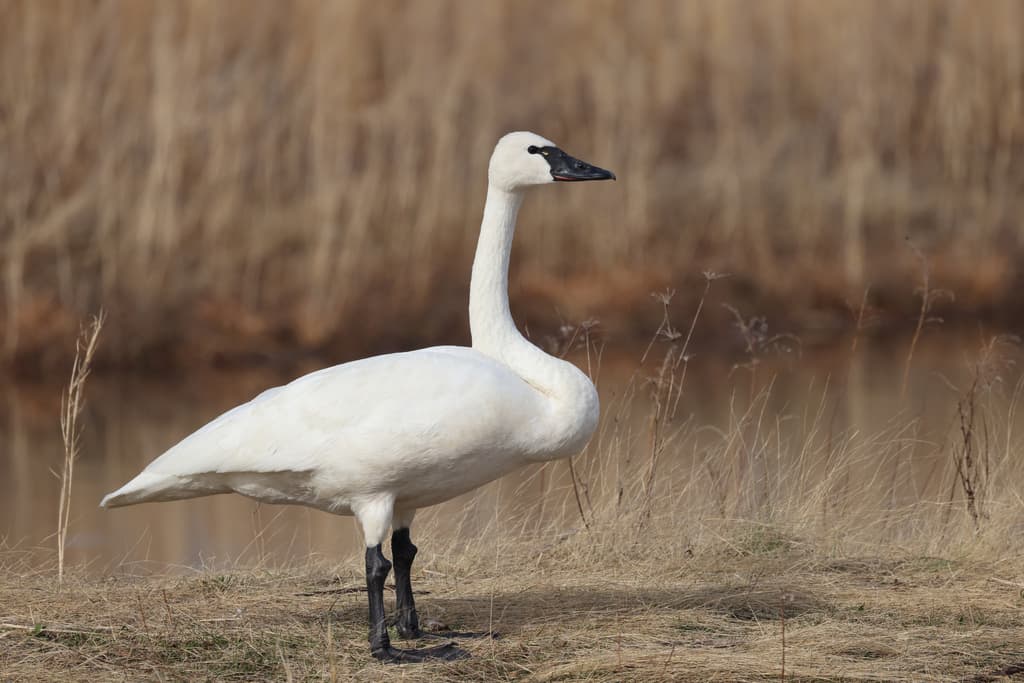
Tundra Swan
Cygnus columbianus
Migration Flyway
Showing primary migration corridor(s) for this species
Last Spotted Near You
About the Tundra Swan
The tundra swan (Cygnus columbianus) is a species of swan which breeds in the arctic, and overwinters in North America, Europe, and Asia. It is the smallest of the Holarctic swans, at 115–150 cm (45–59 in) in length, 168–211 cm (66–83 in) in wingspan and 3.4–9.6 kg (7.5–21.2 lb) in weight. Typically, the plumage of adults is entirely white, with solid black feet, a black beak that has varying amounts of yellow, and a thin streak of pink along the mouthline, although colour variation is common. In the summer, they mainly eat aquatic vegetation, while at other times of year they often eat leftover crops, such as potatoes. They have few natural predators, although sometimes Arctic foxes, parasitic jaegers, and glaucous gulls will prey upon their eggs and chicks.
Source: Wikipedia
Classification
- Scientific name
- Cygnus columbianus
- Family
- Ducks, Geese, and Waterfowl
- Order
- Anseriformes
Similar species
Other members of the ducks, geese, and waterfowl family recorded in North America — a useful place to start if you are not certain of your identification.
- American Black Duck Anas rubripes
- American Wigeon Mareca americana
- Baer's Pochard Aythya baeri
- Baikal Teal Sibirionetta formosa
- Bar-headed Goose Anser indicus
- Barnacle Goose Branta leucopsis
- Barrow's Goldeneye Bucephala islandica
- Black Scoter Melanitta americana
- Black Swan Cygnus atratus
- Black-bellied Whistling-Duck Dendrocygna autumnalis
- Black-necked Swan Cygnus melancoryphus
- Blue-billed Teal Spatula hottentota
Know when the Tundra Swan turns up near you
How rare bird alerts work →Gear for spotting Tundra Swan
Optics
Best Binoculars for Beginners
You don't need to spend a fortune. These four pairs will get you birding confidently on day one.
8 min readRead guide
Cameras
Cameras for Bird Photography
From phone adapters to dedicated rigs, here's what actually works for capturing birds in the field.
12 min readRead guide