Back to Field Guide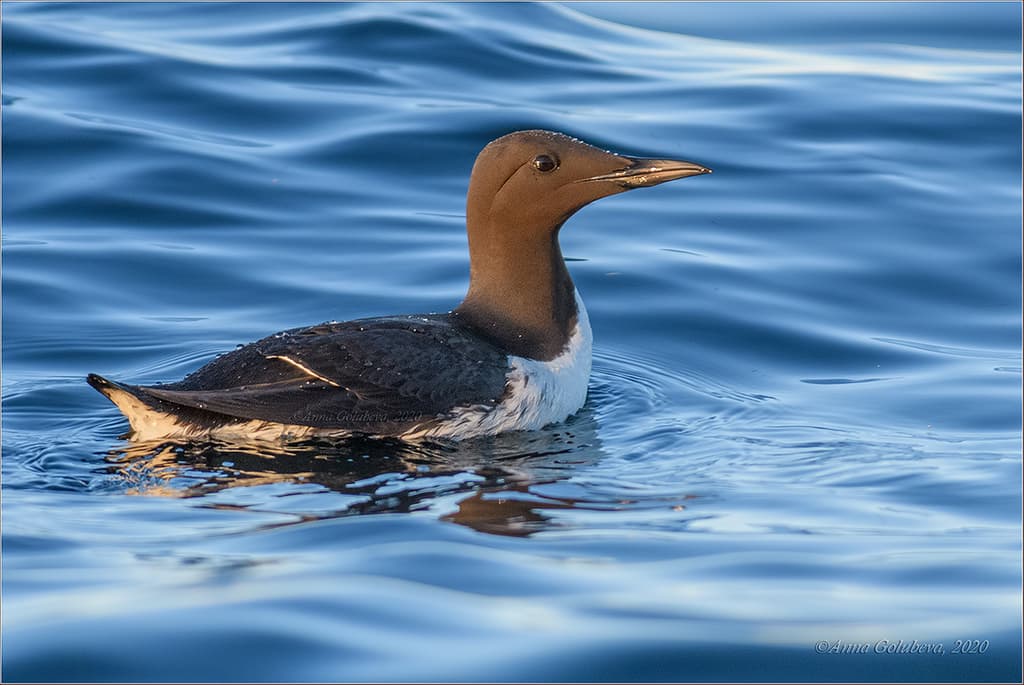

Common Murre
Uria aalge
Audubon Illustration
John James Audubon, Birds of America (1827-1838). Public domain.
Migration Flyway
Showing primary migration corridor(s) for this species
Last Spotted Near You
About the Common Murre
The common murre or common guillemot (Uria aalge) is a large auk, one of several species called murre or guillemot. It has a circumpolar distribution, occurring in low-Arctic and boreal waters in the North Atlantic and North Pacific. It spends most of its time at sea, only coming to land to breed on rocky cliff shores or islands. Common murres are fast in direct flight but are not very agile. They are highly mobile underwater using their wings to 'fly' through the water column, where they typically dive to depths of 30–60 m (100–195 ft). Depths of up to 180 m (590 ft) have been recorded. Common murres breed in colonies at high densities. Nesting pairs may be in bodily contact with their neighbours.
Source: Wikipedia
Classification
- Scientific name
- Uria aalge
- Family
- Auks, Murres, and Puffins
- Order
- Charadriiformes
Similar species
Other members of the auks, murres, and puffins family recorded in North America — a useful place to start if you are not certain of your identification.
- Ancient Murrelet Synthliboramphus antiquus
- Atlantic Puffin Fratercula arctica
- Black Guillemot Cepphus grylle
- Cassin's Auklet Ptychoramphus aleuticus
- Craveri's Murrelet Synthliboramphus craveri
- Crested Auklet Aethia cristatella
- Dovekie Alle alle
- Guadalupe Murrelet Synthliboramphus hypoleucus
- Horned Puffin Fratercula corniculata
- Kittlitz's Murrelet Brachyramphus brevirostris
- Least Auklet Aethia pusilla
- Long-billed Murrelet Brachyramphus perdix
Know when the Common Murre turns up near you
How rare bird alerts work →Gear for spotting Common Murre
Optics
Best Binoculars for Beginners
You don't need to spend a fortune. These four pairs will get you birding confidently on day one.
8 min readRead guide
Cameras
Cameras for Bird Photography
From phone adapters to dedicated rigs, here's what actually works for capturing birds in the field.
12 min readRead guide